

2025 was a productive year for kick-starting construction of new housing developments on City-owned sites. CreateTO, the organization that manages the City of Toronto’s real estate portfolio, broke ground on five projects in 2025, and the organization is looking to continue to deliver even more affordable housing in 2026.
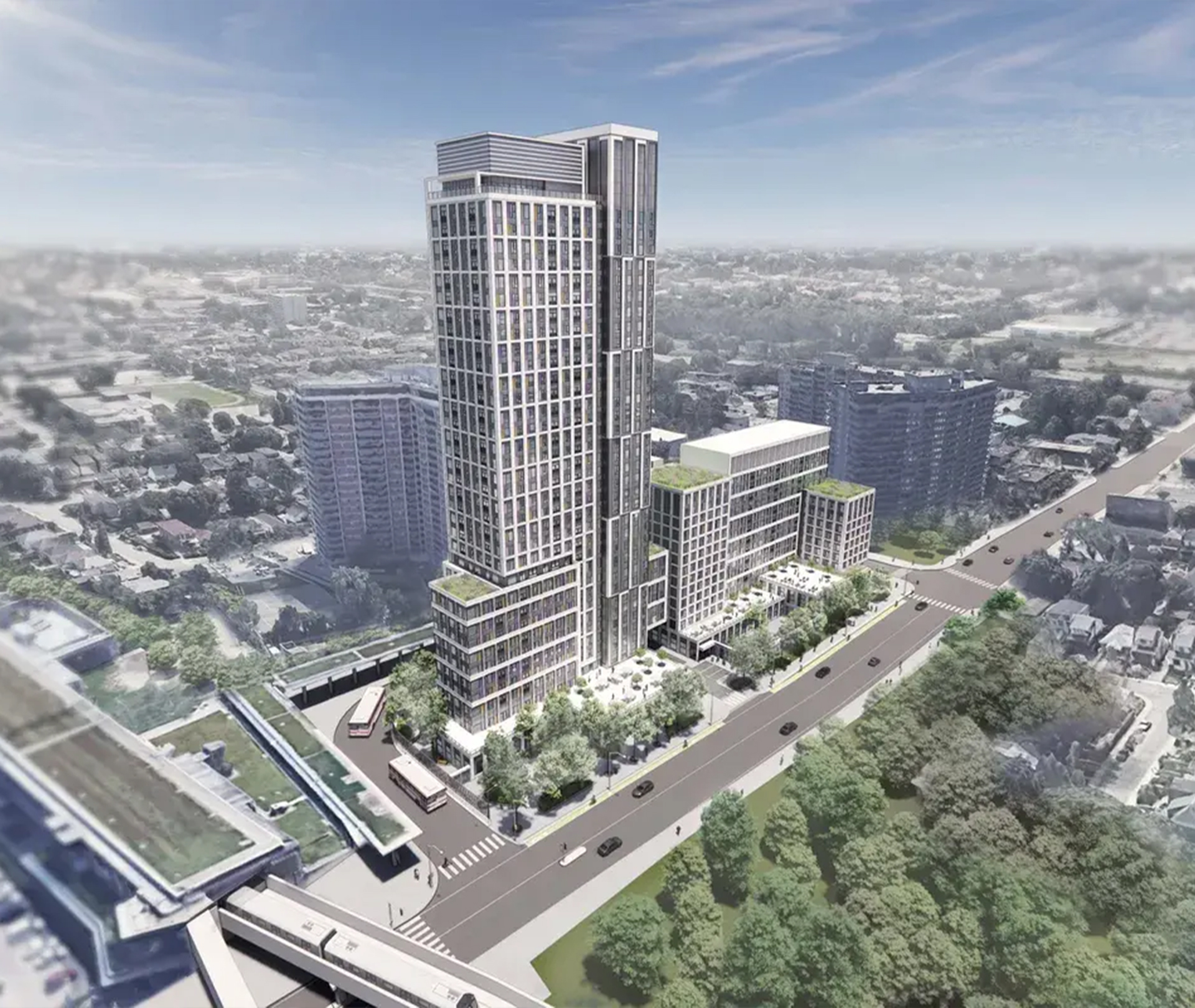
CreateTO celebrated five groundbreakings in 2025, including on sites at 777 Victoria Park Avenue, 610 Bay Street, 253 Markham Street, 2444 Eglinton Avenue East and 275 Merton Street, with the latter being the most recent to break ground, on October 24 (See: “Creativity, Urgency, Alignment”, Novae Res Urbis Toronto, Friday, January 31, 2025).
“It was a really productive year, and we’re looking ahead to 2026 to really remain focused on our key objectives, which include accelerating housing delivery, strengthening partnerships with private and non-profit sectors, and continuing to shape the city so that it works for everyone,” CreateTO chief development officer Michael Norton told NRU.
“We have a lot planned for next year, so there is a lot on the go, and we’re really excited about it. I think it’s also worth highlighting that none of this happens without an incredible team effort. We have a very talented team at CreateTO, but we also have partners at the City with the housing development office, housing secretariat, legal development review, and obviously, the mayor and councillors’ offices, so it really takes a village to deliver these projects.” CreateTO’s real estate
portfolio includes 38 active housing development sites, which account for a total of 19,908 homes, of which 5,897 are affordable rental units.
This year brought with it a new policy framework in the form of the council-adopted Toronto Builds model, where the City acts as the developer in charge of delivering new rental homes within mixed-income communities on City-owned land (See: “Rowing Together, Preventing Leaks”, Novae Res Urbis Toronto, Friday, May 16, 2025).
This policy framework includes a number of different requirements for housing developments on City-owned land, including that 100 per cent of the residential units be purpose-built rental and that a minimum of 30 per cent of those units be affordable rental housing.
The affordability of these rental homes must be maintained for a minimum of 40 years, and all of the units must be rent-controlled at the provincial rent increase guideline, as is set annually by the Province.
“There is a very healthy pipeline of opportunities that have been identified through the Toronto Builds report, so we’re certainly not short on workload. We are taking on 1113 – 1117 Dundas Street West, and we’ve actually brought on our prime architect, Montgomery Sisam and Moriyama Teshima Architects, and that’s a really exciting project. It’s a 10-storey mass timber, geothermal-powered project, right at Dundas and Ossington,” Norton said.
“This will be the first project we’re delivering [under the Toronto Builds framework] and we do anticipate that there may be more opportunities. We’re supporting the City in working with Build Canada Homes to identify more opportunities for the City to deliver purpose-built rental, affordable homes. We see this as the first of a very aggressive pipeline.”
CreateTO is hoping to break ground on the 1113-1117 Dundas Street West project in either Q2 or Q3 of 2026, during what they hope will be another productive year in getting construction underway, with a target of breaking ground on another four or five projects.
“We have about 5,000 homes that are under construction right now with our partners, and we’re hoping to have another couple thousand [units] breaking ground next year,” Norton said.
While bringing new rental and affordable rental housing is at the top of the priority list for CreateTO in 2026, another key priority the organization is looking to build on is strengthening its partnerships with firms in both the private and the not-for-profit sectors, and delivering more housing through the new public builder model.
A key to successful partnerships, according to affordable housing advocate and HousingNowTO technical lead Mark Richardson, is to find development partners who have a wealth of experience and who will be able to come up with repeatable models for delivering housing on City-owned sites.
In the past, CreateTO has expended a good deal of energy and resources on capacity building and partnering with small organizations that may not have had the same level of know-how as larger firms when it comes to delivering housing projects.
“Capacity building was a noble endeavour when there was lots of activity and lots of energy available. Now we have to stick to core competencies, which is executing deals and making sure that we’re getting the kinds of affordability, the kinds of rental housing [needed], and taking this [public builder experience] from a series of one-off projects into a real, repeatable portfolio-based program,” Richardson told NRU.
“Since we [HousingNowTO] launched, year to year, it may not look like there’s a lot of change, but if you go back and look over the last seven years, there’s been a huge amount of change. You look at the [City’s] housing tracker report, and there are 38 [CreateTO] sites. We went from the Housing Now program in December of 2018 when it was announced by [former Toronto mayor] John Tory with 11 sites, and now we have almost four times that and lessons have been learned and things do get better.”
Partnerships yielded some creative solutions for delivering housing in 2025, such as CreateTO’s partnership with Collecdev-Markee on the site at 267-275 Merton Street. The partnership allowed City to pool resources with the private developer to assemble a site that will deliver more housing and more affordable housing than had been proposed originally, and more than would have been possible had each of the sites been developed separately.
The City purchased the Collecdev-Markee site at 267 Merton, which neighbours the City-owned former Toronto Water office at 275 Merton. The city then entered into a ground lease agreement to lease the entire site to the developer at a nominal cost. The end result will bring a 40-storey, 494-unit purpose-built rental apartment building to the assembled site, with 148 of those units designated as affordable rentals.
“The City actually got more property out of that and then we leased it back to them [Collecdev-Markee] on that assembled site. It’s a much better design solution: more affordable units, more market units, and it came together in a really interesting way, in a really unique partnership,” Norton said.
“We have a few of those that are starting to materialize, and there are a lot of opportunities out there where these kind of assembled sites can deliver a greater product for everybody. I just want to highlight that in 2026, we’re not stopping. It’s expected to be busy and successful, and we just really need to thank our partners in the non-profit and private sectors for their collaboration this past year, and we can’t wait to continue that work with them in the new year.”
Source: NOVÆ RES URBIS TORONTO
More Articles
Cranes Up for Affordable and Market Rentals at Victoria Park Station
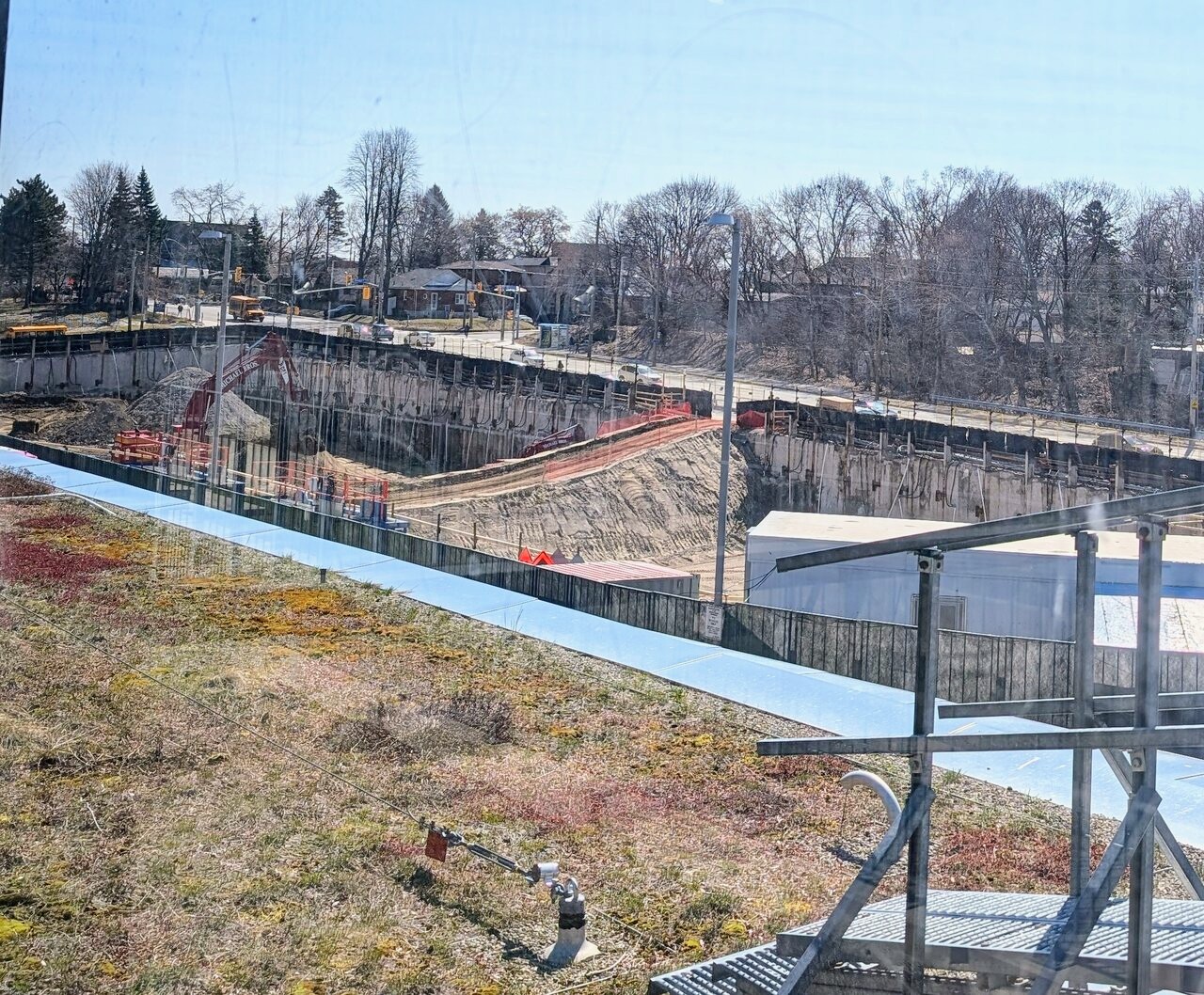
Since UrbanToronto’s last update covering the October, 2025 ground breaking, work at 777 Victoria Park Avenue has progressed through excavation and into below-grade concrete construction, with…
Read More
Ace Hotel Toronto awarded the 2026 Governor General’s Medal for Architecture
Located in Toronto’s historic Garment District, Ace Hotel Toronto reflects the regenerative power of thoughtful architecture. Designed by Shim-Sutcliffe Architects in collaboration…
Read More
Ground Broken for 256 Affordable Rentals at 777 Victoria Park Avenue
Major construction has started at 777 Victoria Park Avenue, where a former TTC commuter lot beside Victoria Park station in Scarborough's Oakridge area…
Read More